Recognition01
“The shift from tools to adaptive experiences will reshape how companies build and serve customers.”
Douglas VowelsCFP® & advisor
inView the original comment
New categories gain momentum when people can repeat the idea, add to it, and pass it on. That is beginning to happen with the brand brain. We introduced it as the intelligence that remains when AI generates software and experiences on demand. People began explaining it in their own words—and some are carrying it into posts of their own.
Follow the signalThe original thesis
As interfaces become temporary and agents become buyers, the durable asset is no longer the application. It is the knowledge, identity, judgment, and memory capable of generating the next one.
As posted
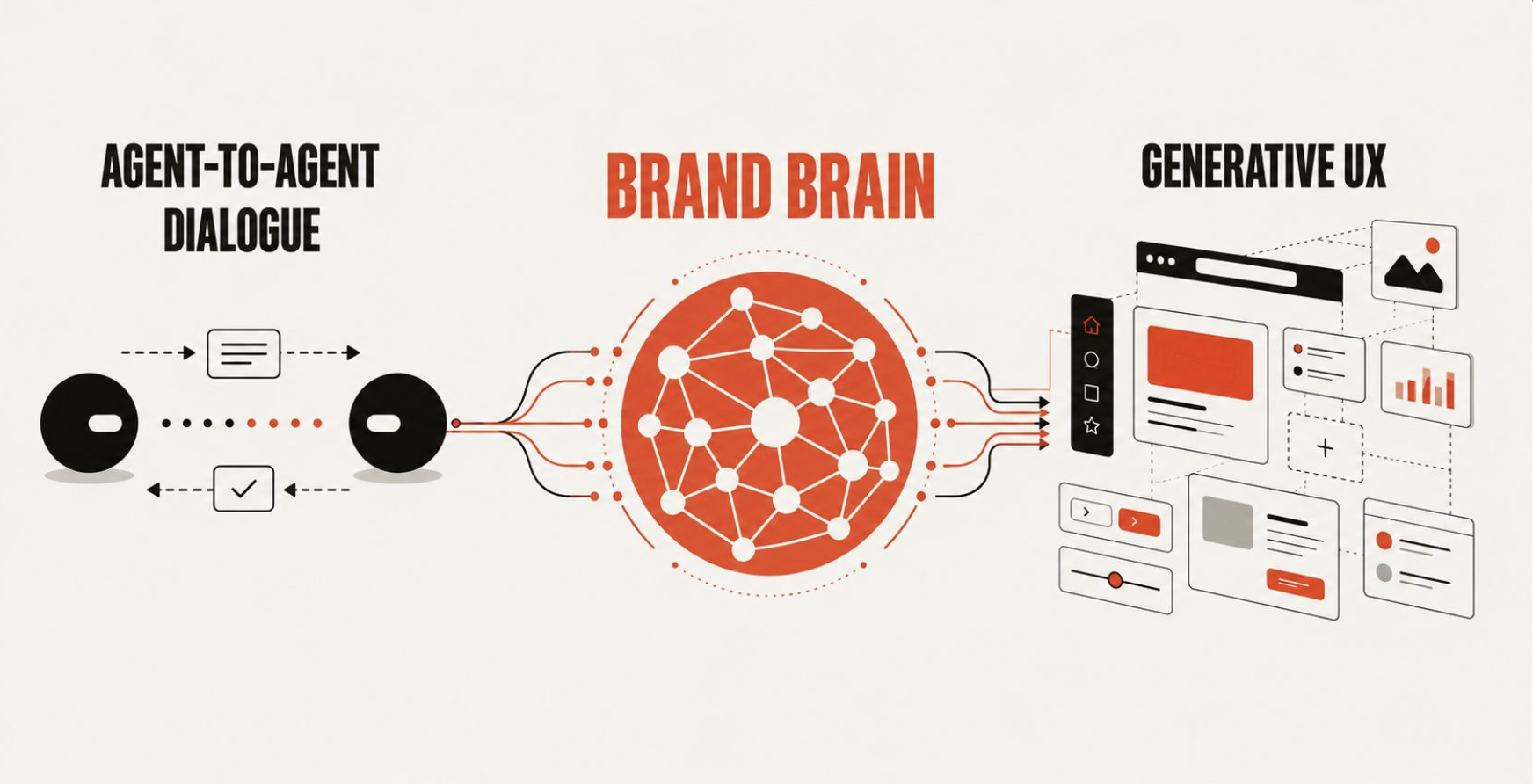
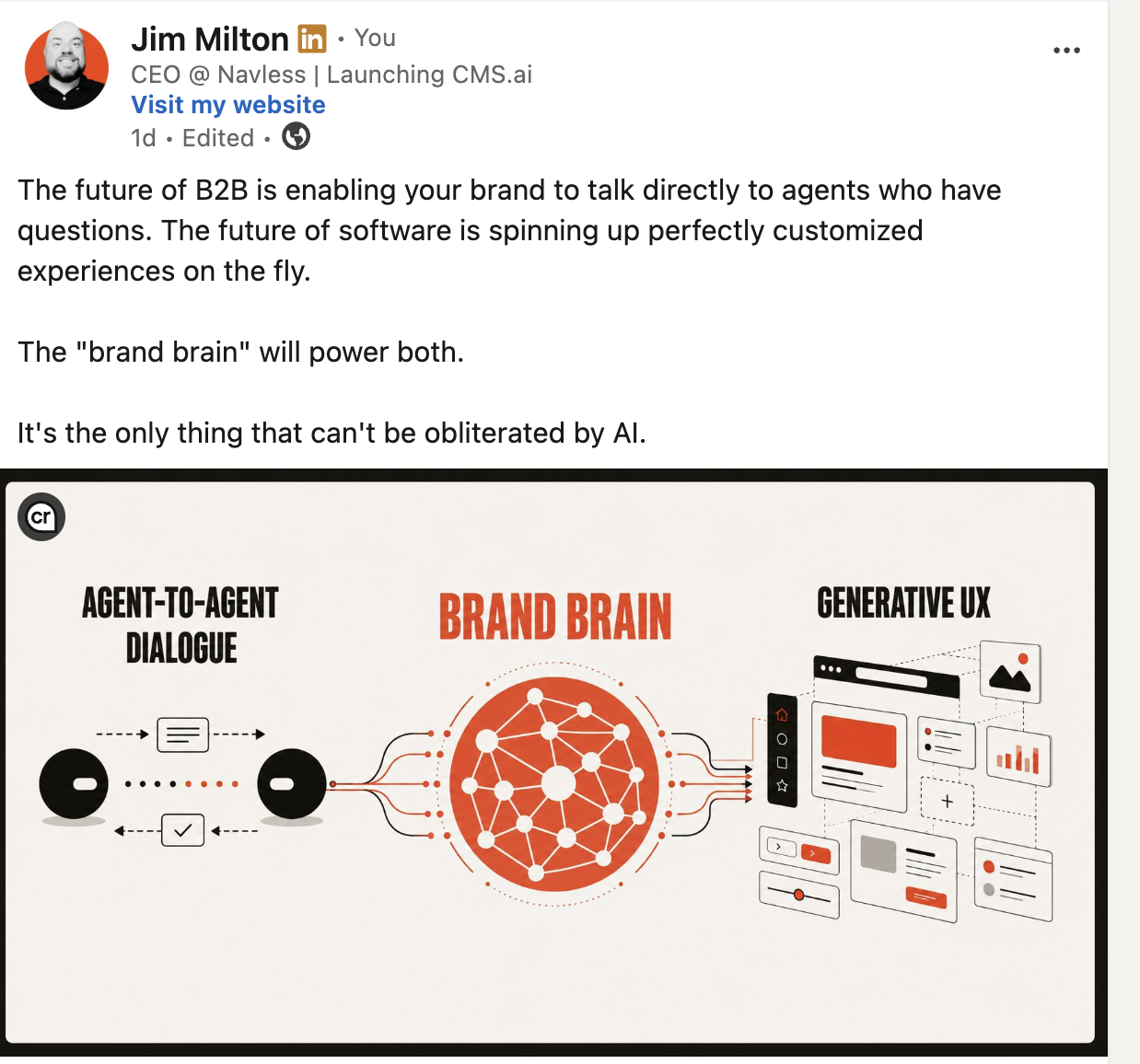
“The future of B2B is enabling your brand to talk directly to agents who have questions. The future of software is spinning up perfectly customized experiences on the fly.”
The brand brain will power both. It is the persistent layer beneath two emerging interfaces: agent dialogue and generative UX.
Then the idea echoed back
The strongest reactions did more than agree. They independently named different consequences of the same underlying shift.
The earliest reaction saw the underlying change: static tools are giving way to adaptive experiences.
“The shift from tools to adaptive experiences will reshape how companies build and serve customers.”
Different people independently identified knowledge, trust, expertise, and accumulated judgment as the durable advantage.
“AI is making technology more accessible to everyone. What remains unique is the expertise, decisions, and customer understanding that only a brand has developed over time.”
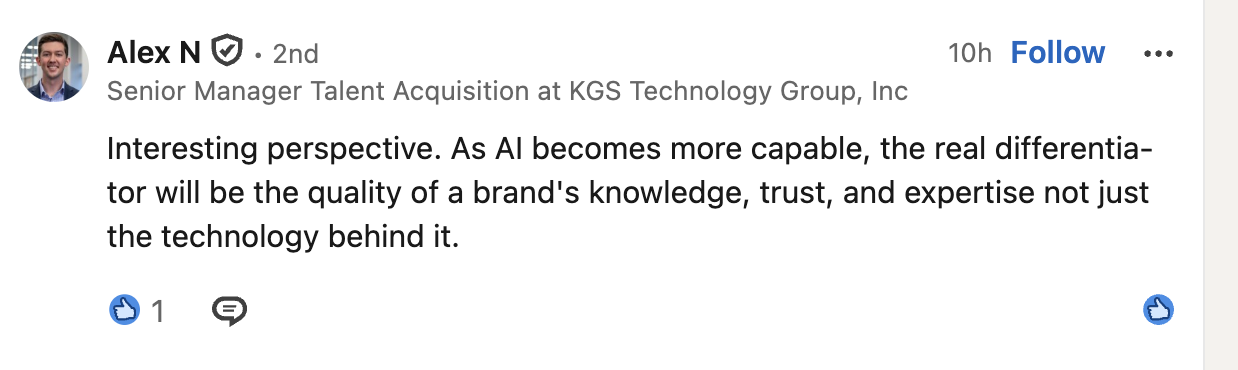
“Interesting perspective. As AI becomes more capable, the real differentiator will be the quality of a brand's knowledge, trust, and expertise not just the technology behind it.”
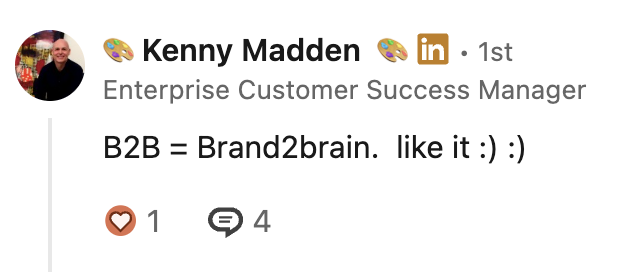
“B2B = Brand2brain. like it :) :)”
They reconstructed the brand brain as a governed data strategy, a source of consistency, and the engine beneath temporary software.
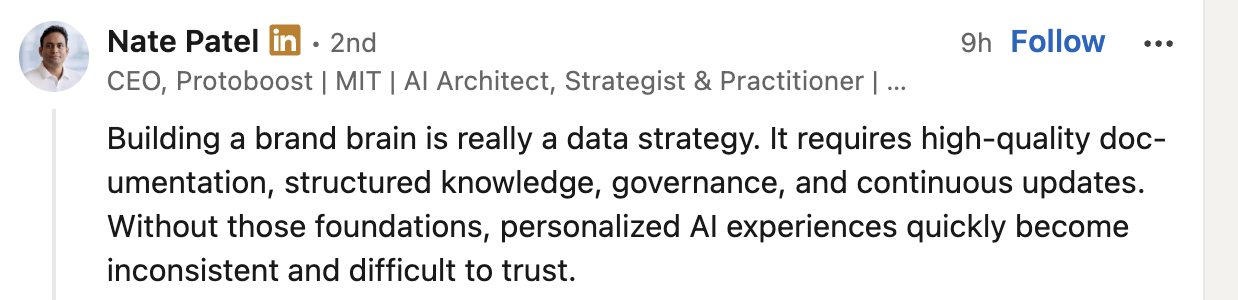
“Building a brand brain is really a data strategy. It requires high-quality documentation, structured knowledge, governance, and continuous updates. Without those foundations, personalized AI experiences quickly become inconsistent and difficult to trust.”
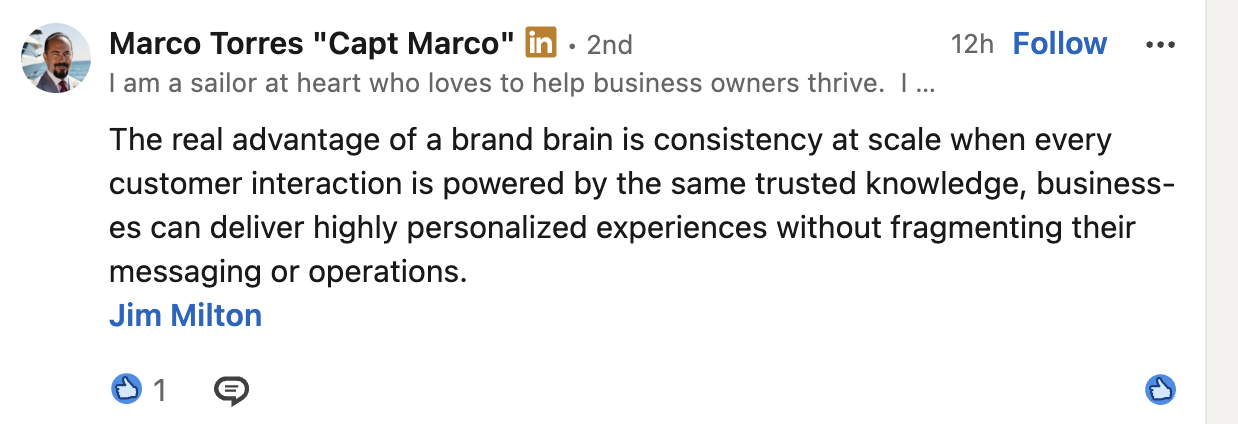
“The real advantage of a brand brain is consistency at scale when every customer interaction is powered by the same trusted knowledge, businesses can deliver highly personalized experiences without fragmenting their messaging or operations.”
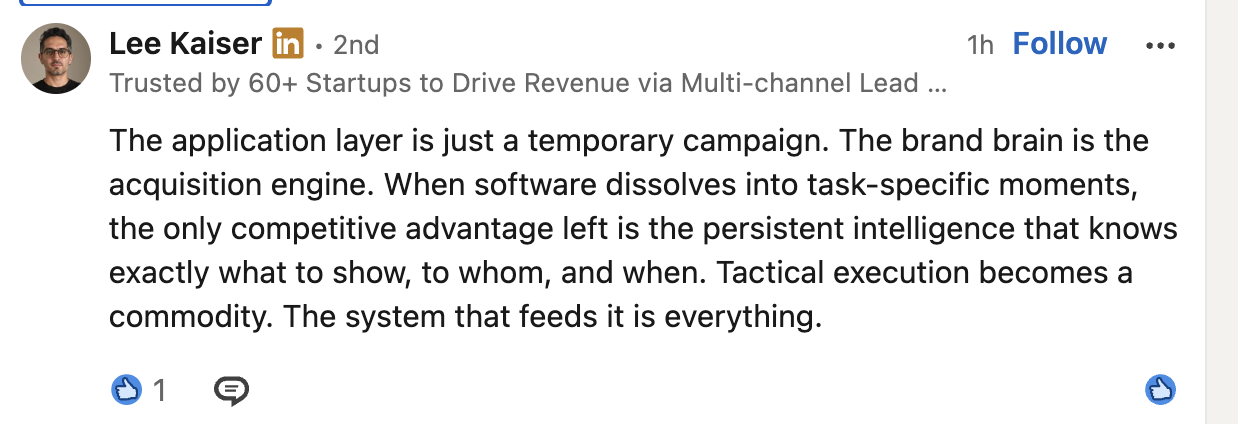
“The application layer is just a temporary campaign. The brand brain is the acquisition engine. When software dissolves into task-specific moments, the only competitive advantage left is the persistent intelligence that knows exactly what to show, to whom, and when. Tactical execution becomes a commodity. The system that feeds it is everything.”
The signal beneath the reactions
But explanation is not the strongest signal. The signal becomes more meaningful when someone carries the idea into a new conversation.
The signal changed.
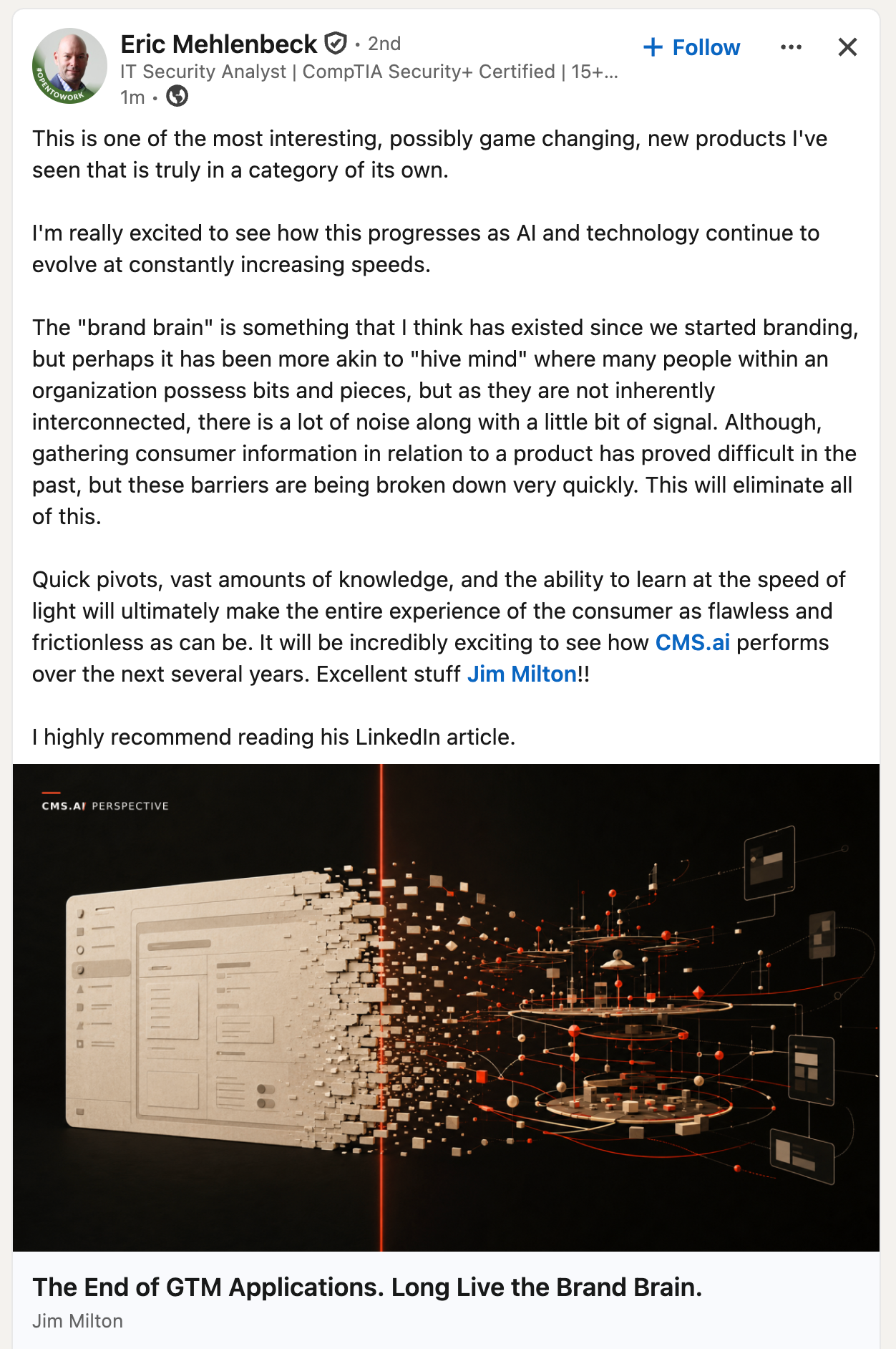
“This is one of the most interesting, possibly game changing, new products I've seen that is truly in a category of its own.”
Independent synthesis
“The ‘brand brain’ is something that I think has existed since we started branding, but perhaps it has been more akin to ‘hive mind’ where many people within an organization possess bits and pieces.”
Eric did not simply repeat the language. He described CMS.ai as the connected replacement for fragmented organizational knowledge—the system that separates signal from noise and learns fast enough to power a frictionless customer experience.
What momentum looks like
The idea is no longer only ours to explain.
Software comes and goes.